Hospitality
RFID in hotels: follow linen from stock to return
A practical method for connecting items, reading points and laundry handovers.

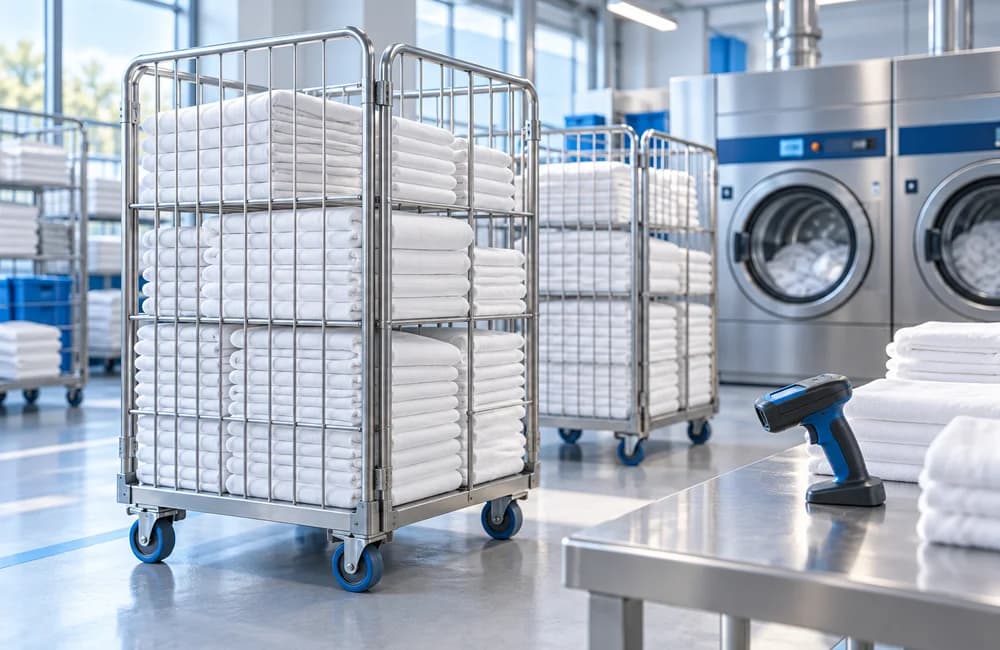
AI-created conceptual illustration for Linid; does not depict a customer site.
A hotel does not always run short of linen because it owns too little. Items may be spread across floors, stores, guest rooms and the laundry without a shared picture of their whereabouts. Before buying more textiles, understand those movements. RFID can provide useful observations when each reading has a clearly defined operational meaning.
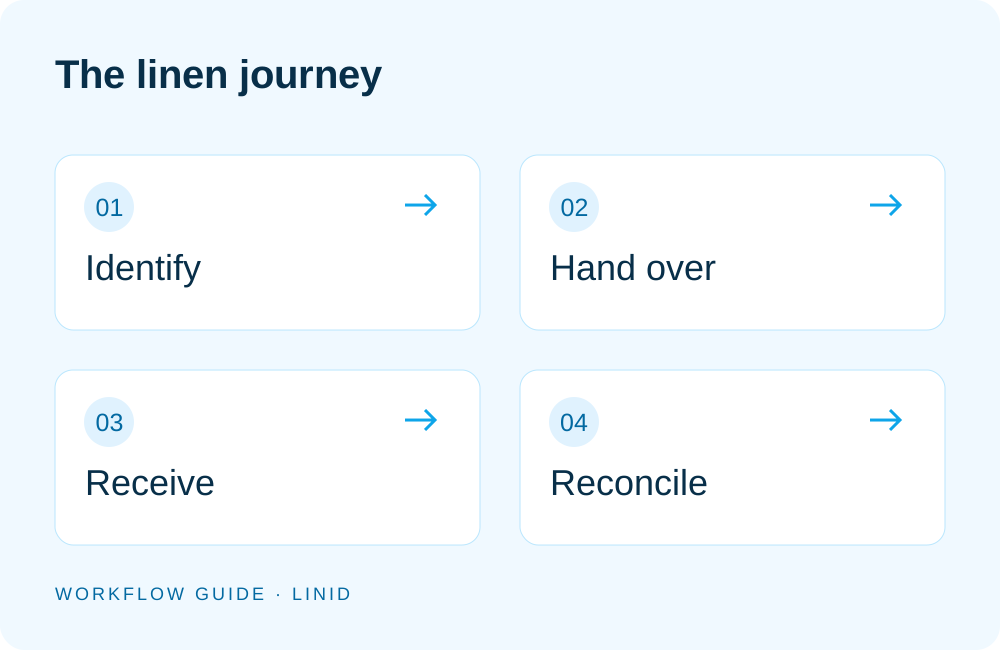 Workflow guide: Identify → Hand over → Receive → Reconcile
Give each piece its own identity
A product reference describes a type of sheet. An individual identifier distinguishes one sheet from every other copy. At registration, connect the tag to the correct item and the information required: category, property and starting status. A mistake here will be repeated in later reports.
Passive UHF RFID uses energy from the reader to communicate with a tag. It is neither a GPS beacon nor automatic proof of washing. The system records an observation at a particular place and time.
Choose checkpoints that answer a question
Start with exchanges between the hotel and its laundry partner. A departure reading and a return reading allow individual identifiers to be reconciled. A store-room count can add visibility later if its value justifies another operating procedure.
- Define who starts and validates each operation.
- Separate counted batches from those still waiting.
- Provide a check for items without readable tags.
- Record retirement so it is not mistaken for loss.
 Illustrative photograph: preparing linen remains a physical operation.
Turn observations into reconciliation
Compare dispatched and received identifiers over a sensible period. Returns may be partial or delayed: an item absent from the first delivery is not necessarily lost. Agree a reconciliation window with the laundry and distinguish outstanding items from confirmed discrepancies.
In a hypothetical example, a batch leaves on Monday and comes back in two deliveries. Comparing only the first return with the departure creates a misleading alert. The history should retain both returns and allow reconciliation to close at the appropriate time.
Run a pilot that resembles daily work
Choose a linen category and a representative route. Test loaded carts, damp textiles, shift changes and incomplete returns. Measure expected, read and manually verified items. Also record the time spent resolving exceptions: fast reading only helps if the whole process remains manageable.
Train a lead operator and document recovery steps for network interruptions or inconsistent reads. Teams need to know when to repeat a reading and when to request an investigation. Agree who can correct an item record, and preserve the reason for that correction so later reconciliation remains understandable.
Prepare one handover with your laundry partner
Choose an actual route and a checkpoint where responsibility clearly changes hands. Before departure, the hotel validates the destination and the list of pieces present. On arrival, the laundry confirms what it received and reports unexpected identifiers separately. Equal totals on both sides are not enough: two lists of the same length can contain different pieces.
Prepare a trial with a known batch, then deliberately remove one piece before final validation. Check that the correction remains visible and that the dispatch record matches the physical load. This is a test scenario, not a reported customer result.
Retain the handover reference, location, time, identifiers and validation status. If connectivity fails, a fallback procedure should allow the movement to be recorded once when service returns. Agree the terminology and ownership with both teams before expanding. The hotel–laundry reconciliation guide explains how to make that shared record useful.
Move from inventory to a decision
A useful first target is a reconciliation process both hotel and laundry can understand. Extend tracking to stores or other sites when it answers a specific question. Explore the hotel solution with Linid and bring a simple workflow map to your demonstration.
Technical reference
GS1 RFID principles and standards describe the identification framework. Reading arrangements and operating procedures still need validation at your site.
← Back to the journal